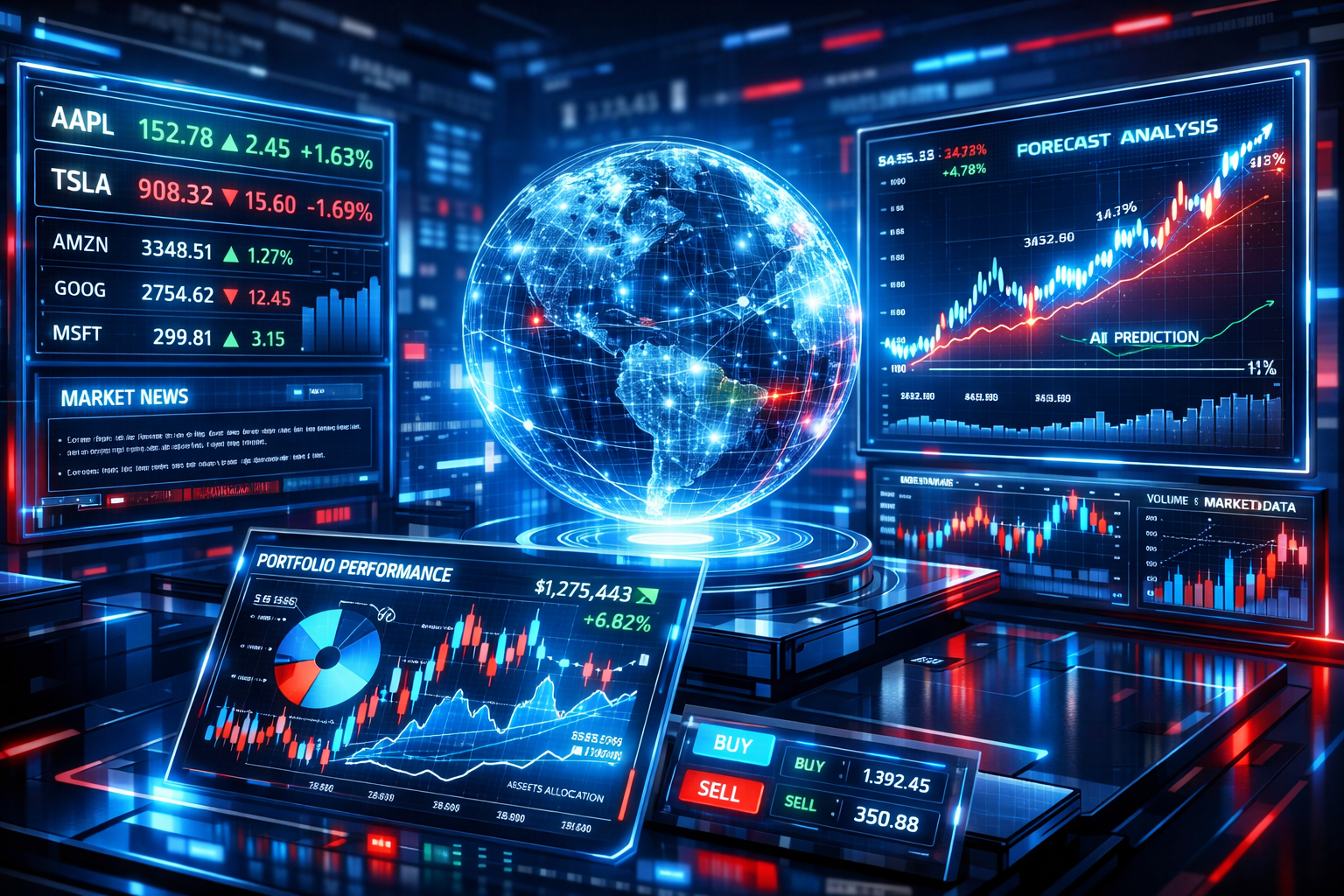
The stock market has always been a complex ecosystem where speed, precision, and insights determine profitability. Traditional trading methods rely heavily on human analysis and intuition, which can be slow and prone to errors. With the rise of digital finance, high-frequency trading, and volatile markets, traders and financial institutions need smarter solutions to stay competitive.
Artificial intelligence (AI) is transforming algorithmic trading by analyzing massive datasets, predicting market trends, and executing trades with unmatched speed and accuracy. AI-powered trading systems can process real-time market signals, optimize strategies, and manage risk more efficiently than human traders. From hedge funds to retail investors, AI is democratizing access to advanced trading capabilities.
In this article, we will explore how AI is revolutionizing algorithmic trading, the technologies behind it, practical applications, benefits, challenges, and the future of AI-driven stock market strategies.
What Is AI in Algorithmic Trading?
AI in algorithmic trading involves using machine learning, predictive analytics, and automation to design and execute trading strategies. Unlike traditional algorithmic trading based solely on predefined rules, AI algorithms adapt to market changes and learn from historical and real-time data to optimize performance.
Applications include:
- High-frequency trading
- Predictive stock price modeling
- Market sentiment analysis
- Portfolio optimization
- Risk management
AI enables traders to act on insights faster than market fluctuations, giving them a competitive edge.
Core AI Technologies in Stock Market Trading
Machine Learning (ML)
ML algorithms analyze historical stock prices, trading volumes, and economic indicators to detect patterns and predict future price movements.
Predictive Analytics
Predictive models forecast stock trends, volatility, and potential market events, allowing traders to make data-driven decisions.
Natural Language Processing (NLP)
NLP is used to analyze news articles, earnings reports, and social media sentiment, providing insights into market psychology and emerging trends.
Automation and High-Frequency Trading
AI-driven systems can execute thousands of trades per second based on predefined strategies and live data, maximizing efficiency and profits.
How AI Improves Stock Market Strategies
1. Real-Time Market Monitoring
AI continuously monitors multiple exchanges, analyzing price movements, trade volumes, and order books to identify profitable opportunities.
2. Predictive Modeling
AI predicts stock price fluctuations using historical data, market indicators, and sentiment analysis, enabling traders to position themselves advantageously.
3. Portfolio Optimization
AI adjusts portfolio allocations dynamically based on risk tolerance, performance, and market conditions to maximize returns.
4. Risk Management
AI assesses market volatility, identifies potential losses, and recommends hedging strategies to mitigate risk exposure.
5. Market Sentiment Analysis
By analyzing news, social media, and financial reports, AI predicts how investor sentiment will impact stock prices and trading volumes.
Benefits of AI in Algorithmic Trading
Enhanced Accuracy
AI reduces human error and improves the precision of trades and market predictions.
Speed and Efficiency
High-frequency AI trading systems execute trades in milliseconds, capitalizing on fleeting market opportunities.
Risk Mitigation
Predictive analytics and real-time monitoring minimize exposure to losses and market volatility.
Scalability
AI allows trading across multiple markets, instruments, and portfolios simultaneously.
Data-Driven Decisions
AI provides actionable insights from vast datasets that humans cannot process manually.
Challenges of AI in Algorithmic Trading
Data Dependency
AI relies on high-quality market data. Inaccurate or incomplete data can compromise predictions.
Market Unpredictability
AI models cannot fully account for sudden geopolitical events or black swan events that disrupt markets.
Regulatory Compliance
Algorithmic trading is subject to financial regulations; AI systems must comply with evolving rules to avoid penalties.
High Implementation Costs
Developing and maintaining AI-driven trading systems requires significant investment in technology and expertise.
Real-World Applications
- Hedge Funds: Use AI to execute complex strategies, manage portfolios, and maximize returns.
- Retail Trading Platforms: Offer AI-based insights and automated trading to individual investors.
- Market Sentiment Tools: AI analyzes social media and financial news to forecast short-term market movements.
These applications demonstrate AI’s transformative impact on trading efficiency and profitability.
The Future of AI in Algorithmic Trading
The future of AI in algorithmic trading is poised for significant innovation:
- Fully autonomous AI trading systems capable of adaptive strategies
- Integration with global market analytics and alternative data sources
- AI-powered predictive models for stocks, ETFs, and derivatives
- Real-time risk assessment and anomaly detection for safer trading
AI will continue to redefine stock market strategies, making trading faster, smarter, and more accessible.
Conclusion
AI is revolutionizing algorithmic trading and stock market strategies by providing predictive insights, automation, and real-time analysis. From high-frequency trading to market sentiment analysis and portfolio optimization, AI empowers traders and investors to navigate complex markets with confidence.
While challenges such as data dependency, market unpredictability, and regulatory compliance exist, the benefits of AI-driven trading are undeniable. As AI adoption grows, the stock market landscape will increasingly rely on intelligent systems for better decision-making, risk management, and profitability.